

I would bet that most of us can find both everyday and extraordinary memories tied to synthetic turf. Mine include picnics on our town center’s “lawn,” my kids’ baseball and softball games, and even the dance floor at my daughter’s wedding this summer among the California redwoods.
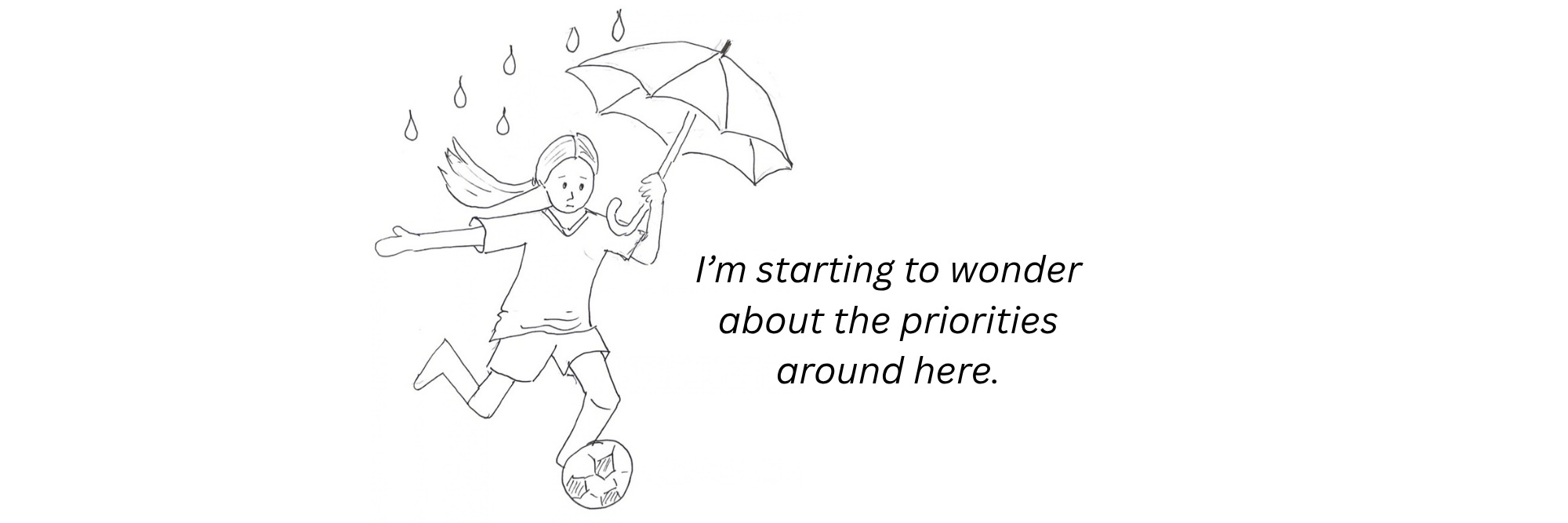
Turns out it’s not all picnics and base hits when it comes to synthetic turf, though. The Tennessee Titan’s football games in September 2026 included cleats that melted and turf temperatures spiking to 157 degrees in the dripping southern heat. Players were spraying their shoes down with water on the sidelines and changing shoes when the soles softened in the swelter. A Titans player reported that “My cleats actually had melted; the midsoles melted completely off...”1
The issue is even hotter than this. There are so many downsides and upsides to plastic turf and so much money involved in the athletic field industry and so many people’s health and livelihoods at stake that debates simmer or rage in every part of the country. The fields are “hot, hard, and toxic,” say scientists and parents.2 “The fields are too hot, injury rates are too high, grass is better,” say pro athletes.3 “The fields are safe and allow play in all seasons and all weather - kids need to be outside more, they need more exercise, games must go on,” say the synthetic turf industry, some school districts, park systems, and team owners.
There’s truth on all sides. As I dug into the claims, spurred at first by my county’s $55 million budget line item for school sports fields this year, I found something bigger buried under the turf: a tangle of facts and claims and yet another story that begins in a Monsanto chemistry lab and ends in lawsuits and landfills.
Should we be losing sleep over this?
Monsanto’s ChemGrass (rebranded AstroTurf) debuted in 1966 to both hype and criticism. Yes, it didn’t die like the natural grass it replaced under the Houston Astrodome’s new opaque roof. But by 1971, with even more fields converting, professional football players were calling for a moratorium on plastic turf and Congress convened a hearing, complete with alarming photographs of players injured by the abrasive, high traction surface that grips shoes as a player’s body twists.4 That was just the start of the controversies.
From the beginning the benefits were clear - greater playing time, a smooth surface, and mud-free games with fewer rainouts. On the flip side, though, was a dark underbelly that included injuries, tests showing toxic chemicals and particles emitted from the plastic blades and infill particles holding them up, and surface readings of intense heat on hot days, as high as 200 degrees F.5
Of course the turf industry has engineered fixes over the years. Thicker cushioning is now available to reduce concussions and joint stress. New infill materials can replace the traditional crumb-rubber tire particles that release cancer-causing chemicals.6 The industry is even working on ways to capture microplastic particles that run off of fields into the environment. The turf is safer than ever and “should not keep parents up at night,” says Melanie Taylor, President and CEO of the Synthetic Turf Council.7
As I review the studies on these issues it strikes me that the fixes don’t address the bigger problems that - if we actually look - dwarf the day-to-day debates. I dove into the center of the Venn diagram of 1) children playing on fields, 2) plastic blanketing fields, and 3) reasons behind the fields. Here’s what I found hunkering there:
If it’s not safe enough for pros, why are we making children play on it?
Professional athletes are pushing for, and getting, real grass. Baseball has largely returned to grass. Elite soccer plays its biggest matches on grass. NFL players are pressing their league to follow suit. It makes sense that pros would lead, given the sheer number of days they spend on the fields and the pace and force of their play. Children win the risk competition in other ways.
Unlike pro athletes, children and local teams are increasingly playing on plastic turf, and they are flat-out more vulnerable to pollutants than adults.
If you ever pursue a career in environmental health, you’ll learn a mantra that becomes the starting point for almost every problem you tackle: “Children are not little adults. Relative to their body weight, they eat, drink and breathe more than adults, while their brains, organs and other biological systems are still developing.”8 These are truths universally acknowledged, with decades of science behind them.
A variation of that covers synthetic turf, with its airborne pollutants and sticky particles for sweaty bodies: pound for pound children breathe more air, their skin is more permeable, and their hand-to-mouth habits provide a direct route for field dust and particles to enter their bodies.9
To the extent that harmful chemicals and particles come off the field’s plastic blades, backing, and infill, children face outsized exposures and magnified health risks.
Make it, sell it, buy it, use it. Is it safe?
This is a familiar arc in our economy. Companies fill or create a need for a product. It goes into widespread use. Questions are raised about its safety. We use public money - your money and mine - to figure out if it’s safe.
And we actually pay three times - for the product we buy, for any health harms incurred, and for the taxpayer-funded studies that finally get the product off the market.
Think of leaded gasoline and asbestos in home insulation, floors and roofs. Though both are now banned or restricted, gasoline’s lead emissions ultimately robbed Americans of over 800 million IQ points,10 while asbestos still claims an average of seven lives each day in the U.S. from the deadly lung cancer it causes.11 As these industries churned out product, it took an uncounted number of taxpayer-funded studies and government assessments to finally justify the bans.
These are extreme examples, from a risk perspective. But the story arc mirrors what we’re seeing unfold for synthetic turf.
We have no federal law requiring pre-market health and safety studies for consumer products like synthetic turf. There are now an estimated 19,000 fields across the country blanketed with the product, and between 1,200 and 1,500 new installations each year split about evenly between new fields and replacements.12 As roughly five million players take the field every day,13 many of them children, federal and state health agencies have begun to study the turf’s safety.
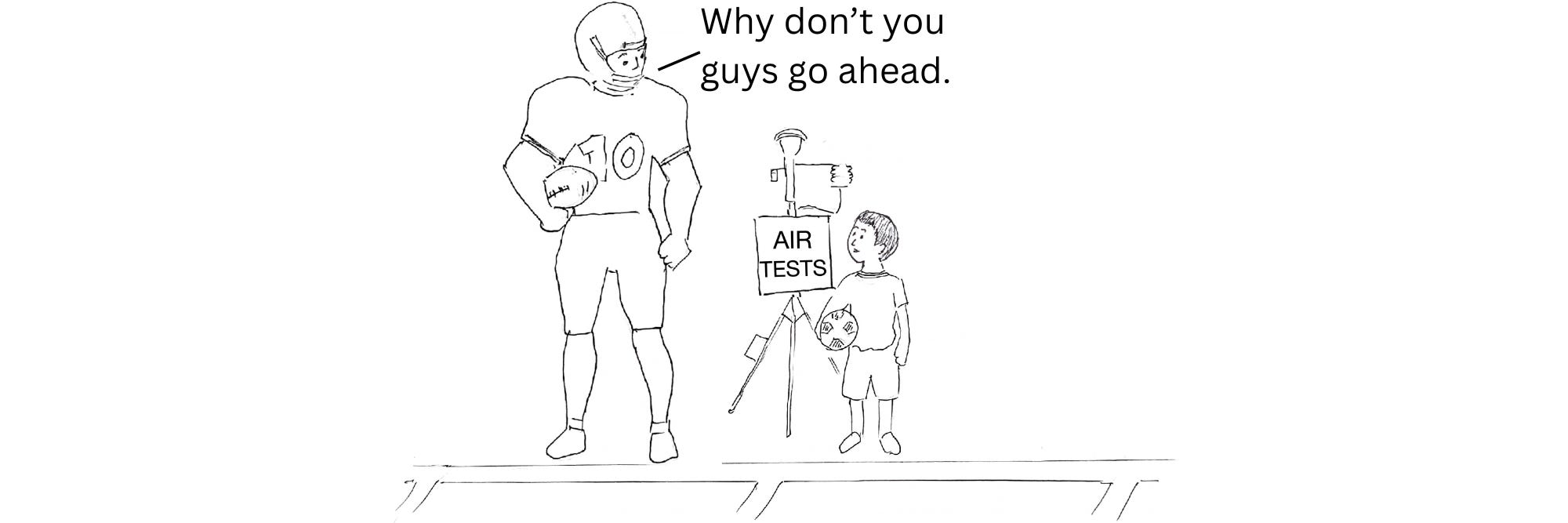
Connecticut recently assessed chemicals released from synthetic turf fields; Washington investigated cancer reports among soccer players; and California spent more than a decade studying crumb-rubber exposures and health risks, while federal agencies - EPA, CDC and CPSC - launched their own exposure research. California continues to track PFAS “forever chemicals” and investigate microplastics from plastic turf while federally funded researchers study children’s exposures to plastic turf chemicals.14 Meanwhile, analysts project steadily increasing sales in the years ahead for this $7+ billion industry.15
Unknowns underfoot - What’s in the plastic and is it safe?
Are the chemicals a problem? We might sleep easy knowing that health agencies’ conclusions to date nearly all point to low risk for athletes and bystanders from exposures to the crumb rubber infill. Research failing to find a cancer cluster among soccer players is also reassuring.16 But - there is a “but,” as you might guess, followed by a list of caveats that could instead keep us awake at night.
The essential problem is that turf chemistry outruns health risk assessments: there are simply too many chemicals in turf blades, backing, and infill to put a risk number on them all. A research team led by Yale tallied 306 chemicals altogether in available tests of compounds released from infill,17 while California detected 474 in their own tests of fields across the state.18 Some of these substances are carcinogens and some are linked to other health problems, but many have so little safety data that their risk can’t be assessed.
In the most complete study of athlete and bystander safety conducted to date, California considered infill only, not the plastic grass or backing, and included only 16 cancer-causing infill chemicals in its cancer risk evaluation. The broader Yale review, meanwhile, identified 58 chemicals in crumb rubber that have been classified by U.S. or European authorities as known, presumed or suspected carcinogens, and another 57 flagged as carcinogens in predictive models applied to chemicals that haven’t been otherwise assessed.19
Cancer isn’t the only concern. Scientists note “the abundance of evidence of… neurotoxicants, mutagens, and endocrine disruptors” found in synthetic turf components as well.20
Each of these adds another question mark to the chemical mix athletes encounter over years of play. And those numbers might be low.
Recent tests of a wide range of plastic types, including some used in turf fields, found that individual plastic samples can contain a multitude of chemicals.21 Each plastic has a dominant polymer, often identified by a recycling code, such as #5 polypropylene used in some artificial grass backings. But woven in the mix are also undisclosed additives, processing aids, and manufacturing residues.
This has important implications for athlete safety. Even the best assessments of health risks for athletes are capturing only a fraction of the chemicals athletes may encounter on synthetic turf. Compound that with the fact that scientists do not understand how these mixtures interact in the body and you begin to see some of the reasons to remain skeptical of turf’s safety when health agencies green-light it.
One piece of good news: We can thank California advocates for helping to drive lead levels down in synthetic turf. Eight years ago tests by the Center for Environmental Health found high lead levels in turf, spurring legal action by the California Attorney General and a 2009 settlement with makers of AstroTurf and other popular brands that required them to reduce lead in their products to better protect children.22 Lead, added to turf to keep the green dyes vibrant,23 is a potent neurotoxicant that can cause irreversible harm to the developing brain, including IQ loss. No level of lead exposure is safe for children, so reducing amounts in turf matters.24
Just the latest sticky problem - what’s next?
These days, action is centered on PFAS “forever chemicals,” so named because of their extreme persistence in the environment and the food chain. In 2019, tests by the Ecology Center and Public Employees for Environmental Responsibility found fluorine, a marker for PFAS, in artificial grass blades and specific PFAS chemicals in turf backing.25 Since then, California regulators have investigated PFAS in turf,26 while the industry committed to eliminating intentionally added PFAS by 2025 and has developed new testing standards.27
PFAS is added to turf plastic to keep it from sticking to machinery during manufacture,28 and, like lead, has no place in a product used by children. The PFAS family of chemicals is linked to cancer, birth defects and other impairments and includes substances toxic at such low levels in the body that states are capping drinking water limits at parts-per-trillion amounts.29
It’s worth taking another look at this recent twist in the turf story. By the time PFAS turned up in synthetic turf, these “forever chemicals” were hardly an emerging concern. Their persistence and health hazards had been raising alarms for decades. Industries were moving them out of outdoor gear, food packaging, carpets, cookware, cosmetics and other products - sometimes voluntarily, sometimes under public pressure or regulatory mandate. Yet synthetic turf manufacturers continued adding PFAS to their products, apparently unknown to the public and health agencies. It took testing by public-interest groups to bring their use in turf to light. Only then did the companies act to eliminate intentionally added PFAS.
New turf may now be made without it, but that doesn’t make the old fields disappear. Children could be playing on PFAS-containing turf for another decade, until those fields wear out and are hauled away.
What chemical in turf will capture out attention next?
Two futures, our choice
Don’t get me wrong - health agencies’ assessments published to date for crumb rubber infill are, for the most part, reassuring.30 We just need to be mindful of the gaps. The known unknowns outnumber the knowns.
Amidst the debates, there are a couple of facts that no one disagrees with: the fields get too hot on hot days, and they generate enormous amounts of plastic waste every 10 or so years when they need to be replaced.
I’m thinking of a field at one of my county’s urban high schools (Bethesda-Chevy Chase High School in Maryland), a grass field that sees heavy play. The University of Maryland scientist who led research on cutting-edge design for grass fields talks about that field’s resilience. Grass is replaced in small areas as needed. By the summer the field sports a bare spot in the center, but it drains so well - by design - that it’s not muddy. New center sod goes in during break. It works, he says - without the plastic.31
The turf war is far from over. So far, bans and moratoriums on synthetic turf have been issued by at least nine municipalities in three states, and have been proposed by a number of state legislatures as well.32 Keep watch for more. Former pro baseball players in Philadelphia have sued turf manufacturers and chemical companies, alleging that PFAS exposures from their home field contributed to their cancers.33 Concerns over alarming numbers of microplastic particles released from fields into waterways have spurred a new suite of publicly-funded studies,34 and crumb rubber infill will be prohibited in new fields in the EU under a microplastic ban taking effect in 2031.35
Meanwhile, my county appears poised to install or replace at least six synthetic turf fields before the 2027-28 school year, and is on track to transition all our high school fields to plastic.36 And across the rest of the country, new installations continue apace.
The question I’m sitting with at the end of my research is this: How did plastic fields become the answer to the simple childlike desire we all share just to get outside and play?
When I look at the issue from all sides, the evidence points to a Sanity Fix that has been growing under our feet all along.

Resources:
Grass versus plastic sports fields: Additional resources to help with local decisions